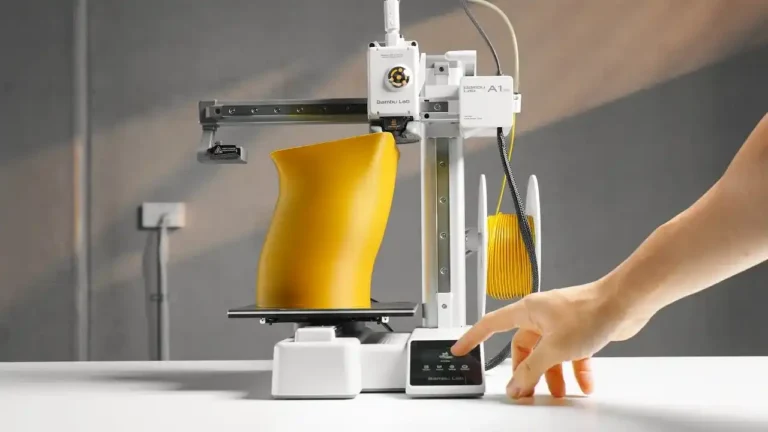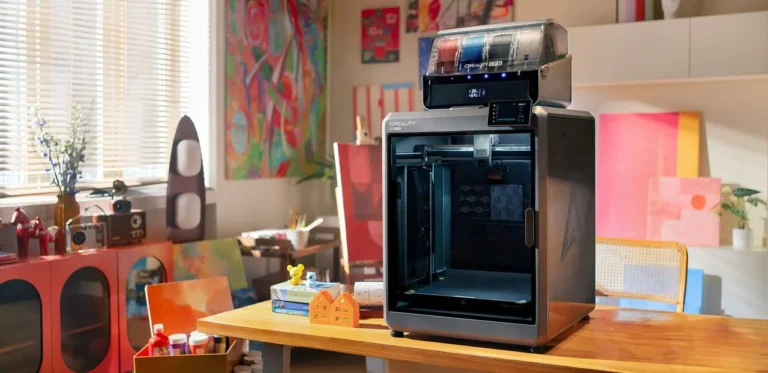


In 2026, the opportunity to make money with 3d printer from home has evolved from a hobbyist’s dream into a legitimate micro-manufacturing industry. With the rise of lightning-fast machines like those from Bambu Lab and the affordability of the Creality ecosystem, individuals are now operating miniature factories from their living rooms. However, simply owning a printer is not enough. Success in this competitive landscape requires a strategic choice of niche, a deep understanding of licensing, and a calculated production workflow.
In this comprehensive 1,450+ word guide, we will analyze the top 5 most profitable niches for 2026, compare the best hardware for mass production (Bambu Lab vs. Creality), and navigate the legal requirements to ensure you can make money with 3d printer from home sustainably and legally.
1. Niche: Functional Engineering and Spare Parts Solutions
The most stable and high-margin way to make money with 3d printer from home is by solving “real-world” problems. In 2026, consumers are moving away from disposable culture and toward a “repair and modify” mindset. When a 5,000-dollar appliance breaks because of a small 5-cent plastic gear that is no longer manufactured, you have a massive business opportunity.
- Product Ideas: Replacement trim for vintage cars, custom brackets for home automation sensors, and gears for discontinued kitchen appliances.
- Why it works: These are “need” products, not “want” products. Customers are less price-sensitive when a 20-dollar 3D-printed part saves them from buying a brand-new machine.
- Technical Requirement: To excel here, you must move beyond PLA. You will need a printer capable of handling ASA, Nylon, or Carbon Fiber-reinforced filaments to ensure the parts can withstand heat and mechanical stress.
2. Niche: High-End Custom Lighting and Chandeliers
Lighting is perhaps the highest value-added niche in the 3D printing world. A single spool of filament costing $20 can be transformed into a designer chandelier that sells for $200 to $500.
- The 2026 Trend: Parametric designs printed in “Vase Mode.” These seamless, futuristic designs are impossible to manufacture with traditional injection molding, giving 3D printer owners a unique market advantage.
- Lithophanes: Personalized photo lamps remain a bestseller for gifts. By converting a customer’s family photo into a 3D light-up lamp, you create an emotional product that justifies a premium price tag.
3. Niche: Tabletop Gaming and Collectible Miniatures (TTRPG)
The community surrounding Dungeons & Dragons, Warhammer, and other tabletop games is massive and famously willing to spend on their hobby. This is a primary sector for those looking to make money with 3d printer from home.
- The Licensing Strategy: Do not make the mistake of selling models you found for free on the internet. Instead, join a designer’s Merchant Tier on Patreon or Myminifactory Tribes. For a monthly fee, you get the legal right to sell their professional-grade sculpts.
- Production Focus: High-detail characters require Resin (SLA) printers, while massive terrain pieces and castles are best suited for fast FDM printers like the Bambu Lab P1S.
4. Niche: Accessibility and Assistive Tools
Combining social impact with business, designing and printing tools for the elderly or individuals with disabilities is a niche that requires very little marketing because the value is self-evident.
- Product Examples: Ergonomic bottle openers for those with arthritis, Braille-labeled organizers for the visually impaired, and custom prosthetic limb covers.
- Market Advantage: These products are often “essential” items. Once you build a reputation in this niche, word-of-mouth becomes your strongest sales tool.
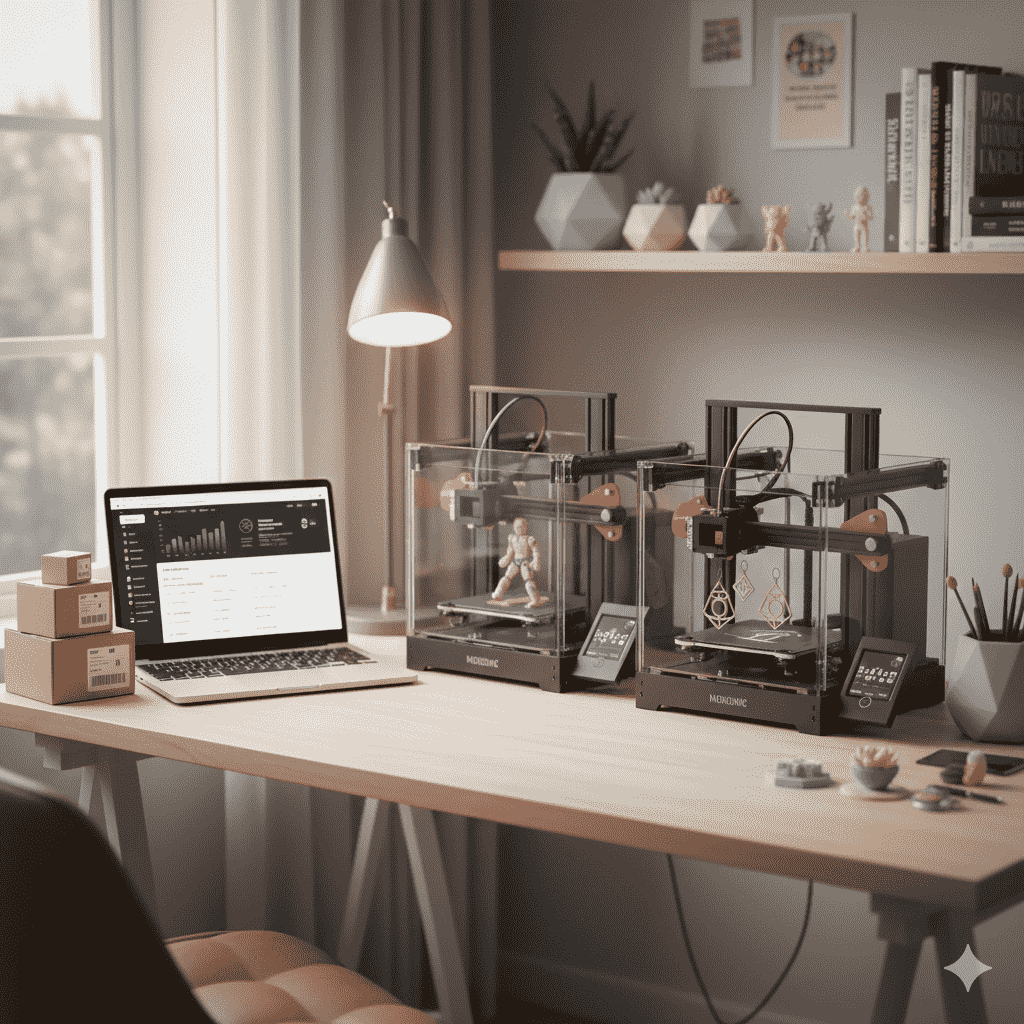
5. Niche: Bespoke Corporate Gifts and Micro-Promotions
Small businesses in 2026 are looking for unique, sustainable alternatives to cheap, mass-produced corporate swag.
- The Multi-Color Advantage: Using a Bambu Lab AMS system, you can print a company’s logo directly into the product in full color. This eliminates the need for messy painting or stickers, providing a professional finish that looks like a retail-grade product.
Mass Production Hardware: Bambu Lab vs. Creality
To successfully make money with 3d printer from home, your hardware choice will dictate your profit margins.
Bambu Lab (The Efficiency King)
Bambu Lab (X1-Carbon and P1S series) has set the standard for 2026 production.
- Speed: At 500mm/s, you can produce three times as many items per day as a standard printer.
- Reliability: AI-driven failure detection means you can print overnight without waking up to a “spaghetti” mess of wasted filament.
Creality (The Farm Favorite)
Creality (K1 series and Ender 3 V3) remains the choice for those looking to scale a “Printer Farm” on a budget.
- Cost of Entry: For the price of one Bambu Lab X1C, you can often buy three or four Creality printers. This allows you to print different colors or different products simultaneously.
- Customization: If you enjoy “tinkering,” Creality machines are easier to modify for specific tasks, such as installing a larger nozzle for faster, industrial-grade prints.
2026 Legal and Tax Compliance: A Crucial Step
When you begin to make money with 3d printer from home, you are legally a manufacturer. Ignoring the paperwork can lead to your business being shut down overnight.
- Commercial Licensing: Always verify the license of the STL file. CC BY-NC means “Non-Commercial.” If you sell these without a merchant agreement, you are committing copyright infringement.
- Product Liability: If you sell a 3D-printed toy that breaks and causes injury, you are liable. In 2026, it is highly recommended to have product liability insurance and follow safety guidelines (like CE marking in Europe or ASTM in the US).
- Taxes: Most countries have a threshold for home-based businesses. Once you exceed this, you must register as a business and report your income. Many regions offer “Micro-Enterprise” tax exemptions that you should investigate.
FAQ: Common Questions About 3D Printing Businesses
Can I really make money with 3d printer from home in 2026?
Yes. However, the market for generic “trinkets” is saturated. Profitability in 2026 lies in customization, functional parts, and high-quality post-processing.
Which filament is best for selling?
While PLA is great for decorative items, PETG is the “all-rounder” for functional items. For high-end sales, consider Recycled PLA to appeal to eco-conscious consumers, which is a major trend in 2026.
How do I price my 3D printed products?
A standard formula for 2026 is: (Material Cost + Electricity) + (Machine Wear-and-Tear per hour) + (Labor for cleanup/painting) + (Markup/Profit) = Retail Price. Don’t forget to factor in platform fees (like Etsy’s 6.5% transaction fee).
Do I need to be a designer to make money?
No. While being a designer is a huge advantage, many successful makers act as “authorized distributors” for famous designers by paying for a monthly Merchant License.
Conclusion: Building a Sustainable Future
Starting a journey to make money with 3d printer from home is a marathon, not a sprint. By selecting a niche that requires specialized knowledge or high-quality materials, you insulate yourself from the “race to the bottom” pricing seen on mass-market platforms. Whether you choose the incredible speed of Bambu Lab or the scalability of Creality, focus on quality, respect intellectual property, and always put safety first.
Would you like me to prepare a detailed guide on “How to Calculate 3D Printing Costs for Your Business” next?