


Qidi Tech Cost Calculator
Production energy and material cost analysis
Qidi Tech 3D Printer Cost Calculator Guide: Part 1 – Engineering Production Economics
The evolution of 3D printing from a hobbyist’s pastime to a professional production method has brought a critical challenge to the forefront: Precision Costing. Especially with high-performance machines like the Qidi X-Max 3, Qidi Q1 Pro, and X-Plus 3, understanding the financial metrics behind every gram of filament is no longer optional—it is a business necessity.
In this comprehensive guide, we will break down the economic landscape of 3D printing within the Qidi Tech ecosystem, focusing on how high-speed Klipper firmware and active chamber heating redefine your production costs.
Why Precise Costing is the Backbone of 3D Printing Success
Calculating the cost of a 3D print is often misunderstood as simply multiplying the weight of the plastic by its price. However, a professional “Cost Per Part” (CPP) analysis requires a much deeper dive.
- Quoting Accuracy: If you are running a 3D printing service bureau, not knowing your exact costs leads to either lost margins or uncompetitive pricing.
- Strategic Resource Planning: Knowing the operational expenses of a Q1 Pro versus an X-Max 3 allows you to assign the right job to the right machine for maximum profitability.
- Sustainability: Tracking energy and material waste ensures your workshop remains viable in the long run, especially with rising energy prices globally.
Pro Tip: While calculating material and energy is vital, understanding when your machine pays for itself is equally important. Use our professional3D printer ROI calculatorto determine the break-even point and investment return of your Qidi Tech hardware.
The Qidi Tech Advantage: Power, Speed, and Efficiency
Qidi Tech has positioned itself as a leader in affordable industrial-grade printing. Their latest CoreXY lineup features technologies that directly impact your electricity bill and production time.
1. Active Chamber Heating vs. Energy Consumption
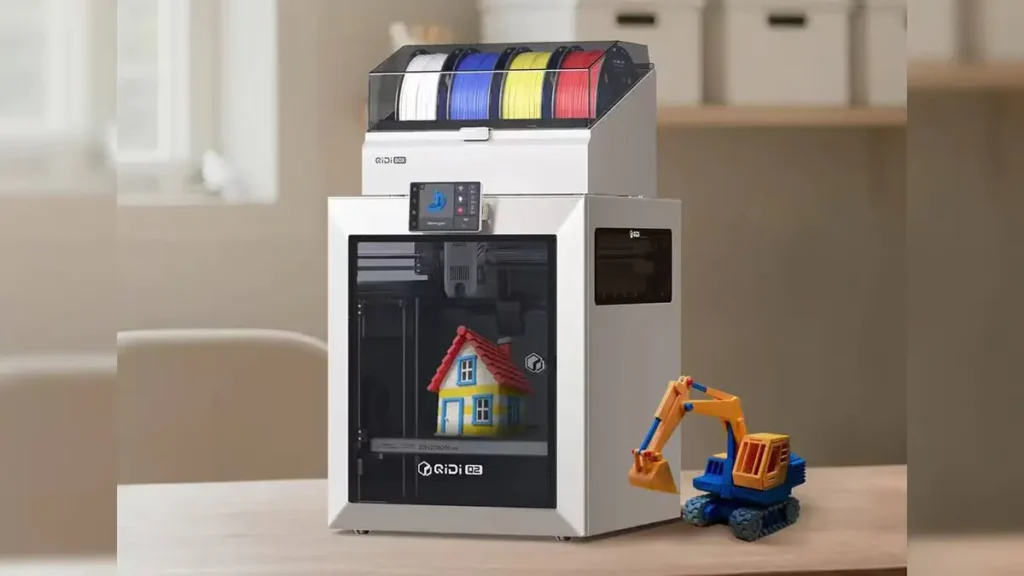
Unlike standard open-frame printers, the Qidi X-Max 3 and Qidi Q1 Pro feature active chamber heaters. These heaters (ranging from 300W to 600W) are essential for printing engineering-grade materials like ABS, ASA, and Nylon-CF without warping.
- The Warm-up Phase: This is when the printer draws maximum power to bring the bed and the chamber to target temperatures.
- The Steady State: Once the environment is stabilized, the power draw drops significantly. Our calculator uses a 40% average power coefficient to reflect this stabilized state, providing a much more accurate estimate than simple nominal Wattage calculations.
2. The Klipper Effect: Time is Money
All new Qidi printers come factory-shipped with Klipper firmware, enabling speeds up to 600mm/s. In the world of SEO and production, speed equals efficiency.
- Reduced Operational Hours: A print that used to take 10 hours on an older machine might take only 3 hours on a Qidi X-Smart 3. This saves 7 hours of “idle power” consumption (motherboard, fans, and lights), drastically lowering the overhead per part.
Filament Costing: Beyond the Price Per Kilogram
When you enter the weight of a part into our tool, you are using data typically provided by slicers like Qidi Print or Orca Slicer. However, to be truly accurate, you must account for “The Invisible Grams”:
Support Structures and Scraps
Complex geometries require supports. Depending on the orientation, supports can add 10% to 50% to the total material used. Additionally, professional workshops factor in a 5% scrap rate to account for failed prints, filament tangles, or power outages.
Purge Lines and Brims
Small parts are particularly sensitive to these. A 2-gram purge line for a 5-gram part means you are wasting nearly 30% of your material on setup. Our calculator helps you visualize these costs before you hit “print.”
Global Market Dynamics: Energy and Material Trends in 2026
The defaults in our calculator ($20/kg for Filament or local equivalents) are optimized for the current market, but these are highly volatile:
- Energy Prices: With fluctuating global energy costs, knowing your kWh rate is essential. Industrial tariffs often differ significantly from residential ones.
- Specialty Filaments: While standard PLA is affordable, the Carbon Fiber (PA-CF) or high-temp filaments that Qidi machines excel at can cost 3 to 4 times more.
Qidi Tech Model Comparison: Efficiency Profiles
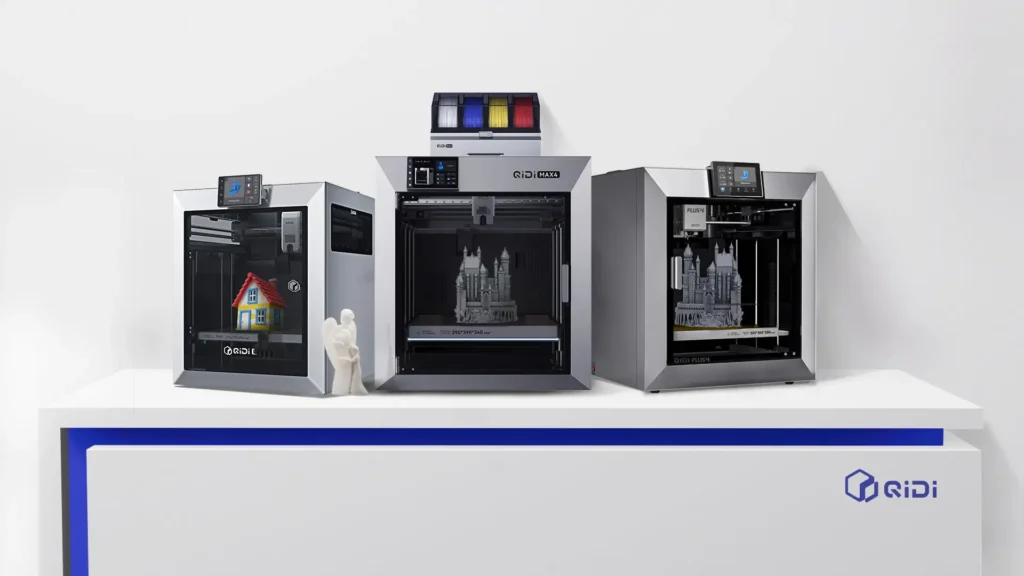
- Qidi X-Smart 3 (300W): The “Economy King.” Perfect for mass-producing small parts with the lowest energy footprint in the lineup.
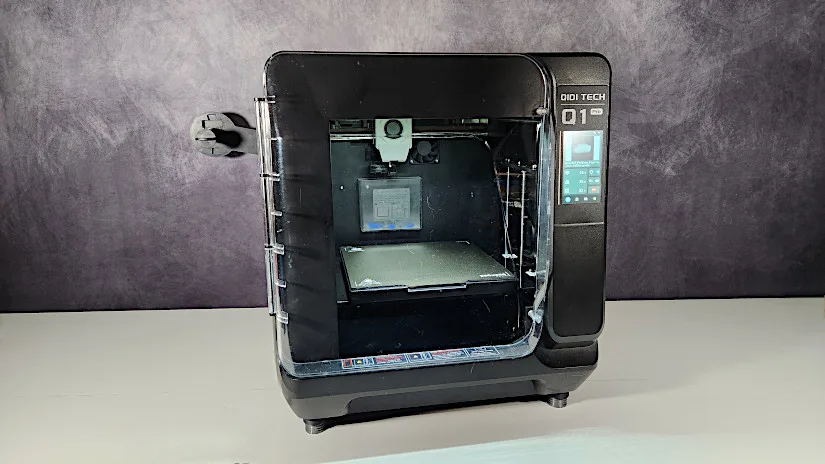
- Qidi Q1 Pro (350W): The “Performance Balanced” model. It offers the best ratio of engineering capability (active heating) to power consumption.
- Qidi X-Max 3 (600W): The “Industrial Workhorse.” While it has the highest power draw, its ability to print massive parts in one go eliminates the need for assembly and post-processing, making it more profitable for large-scale projects.
Conclusion of Part 1
Accurate costing is the first step toward a profitable 3D printing operation. By leveraging Qidi Tech’s high-speed technology and our specialized calculator, you can transform your workshop into a data-driven production facility.
Qidi Tech 3D Printer Cost Calculator Guide: Part 2 – Hidden Overheads, Maintenance, and Global Pricing Strategies
In Part 1, we established the baseline for energy and material costs. However, to run a truly profitable 3D printing business or a cost-effective laboratory, you must look beyond the raw data. In this second installment, we explore the “silent” expenses that often erode profit margins and how the Qidi Tech ecosystem handles long-term operational stress.
1. The “Hidden” Consumable Costs
When you calculate the price of a print, the filament on the spool is only one part of the equation. Professional 3D printing involves several secondary consumables that add up over hundreds of hours of operation.
Nozzle Degradation and Replacement
Qidi Tech machines, particularly the X-CF Pro and Q1 Pro, are frequently used with abrasive materials like Carbon Fiber (CF) or Glass Fiber (GF).
- Hardened Steel Nozzles: While durable, they are not invincible. Over time, the internal diameter widens, leading to inconsistent extrusion and “print failures.”
- Cost Factor: Factor in a “nozzle wear tax” of roughly $0.05–$0.10 per printing hour if you are running abrasive materials consistently.
Build Plate Longevity
The PEI-coated spring steel sheets provided by Qidi offer excellent adhesion. However, high-temperature cycles (especially with the X-Max 3’s 120°C bed) eventually fatigue the coating. Small tears or loss of adhesion properties mean the plate will eventually need replacing.
Maintenance Fluids and Cleaning
High-speed printing at 600mm/s requires the linear rails and lead screws to be perfectly lubricated. Using high-quality synthetic grease and cleaning the rails with Isopropyl Alcohol (IPA) are minor but recurring costs that ensure your Wattage-per-hour stays low by reducing motor friction.
2. Incorporating Labor and Design Value
A common mistake in the 3D printing industry is valuing the machine’s time but not the human’s time. Even with a reliable Qidi fleet, “human touchpoints” are a significant cost factor.
Slicing and Preparation
Setting up a complex print in Orca Slicer or Qidi Print takes time. This includes orienting the part, optimizing support structures, and selecting the correct material profile.
- Recommendation: Apply a flat “Setup Fee” or an hourly engineering rate to the initial calculation.
Post-Processing
Removing supports from a Qidi Q1 Pro print, sanding, or heat-treating parts to increase thermal resistance are manual tasks.
- ROI Integration: If post-processing takes longer than the print itself, your 3D printer ROI calculator metrics will shift. Reducing support material through smart design is the fastest way to increase your hourly profit.
3. Commercial Pricing Models for 2026
Once you have the Net Production Cost from our tool, you need to decide how to price your services for the market. Here are the three most common strategies used globally:
| Strategy | Formula | Best For |
| The Hobbyist Multiplier | Net Cost x 2 | Friends, family, and non-critical prototypes. |
| Hourly Machine Rate | (Net Cost) + ($3-$10 per hour) | Standard commercial printing services. |
| Industrial / Engineering | Net Cost x 5 (or more) | Functional parts, high-temp materials (PPSU/PA-CF), and urgent deadlines. |
4. Maximizing Efficiency with Qidi Tech Hardware
To keep your costs at the absolute minimum, leverage the built-in features of your Qidi machine:
- Large Nozzle Strategy: Moving from a 0.4mm to a 0.6mm nozzle can reduce print time by up to 40% for structural parts. Less time on the bed means less electricity consumed.
- Filament Drying: Qidi’s high-end machines excel at technical plastics. However, damp filament leads to stringing and failed prints. Using a dedicated dryer prevents “scrap costs,” which are the most expensive type of waste.
- Remote Monitoring: Use the built-in camera and Klipper (Fluidd/Mainsail) interface to catch errors early. Stopping a failed print at hour 2 instead of hour 20 saves both energy and money.
Frequently Asked Questions
How is the electricity consumption of Qidi Tech printers calculated?
Qidi Tech printers use high-speed Klipper firmware. Our calculator uses 40% of the printer’s nominal Wattage. This represents the average power draw after the initial heating phase of the bed and nozzle is complete.
Are support structures included in the filament cost?
Yes. When you enter the total weight (in grams) provided by your slicer (Qidi Print or Orca Slicer) into the “Part Weight” field, the calculator automatically includes all material used, including supports and brims.
Does the active chamber heater on the Qidi Q1 Pro increase costs significantly?
While active heating draws more power, it prevents warping and print failures. This actually saves money in the long run by reducing the “scrap rate” and ensuring successful prints with engineering materials.
Should I add maintenance costs to the 3D print price?
For professional use, it is recommended to add a small hourly fee for nozzle wear and belt maintenance. For a deeper financial analysis, you can use our dedicated ROI calculator tool.
Is the calculated cost the final selling price?
No, the tool provides the “net production cost.” To determine a selling price, you should add labor costs, profit margins, and taxes on top of this base amount.