


Peopoly Cost Calculator
Professional large-format resin analysis
Peopoly Resin Cost Calculator: Professional Guide to Large-Format Printing ROI
In the world of large-format MSLA printing, Peopoly has set the standard with machines like the Phenom, Phenom Forge, and the Prime series. While these printers allow for massive builds, they also introduce significant financial stakes. A single print can consume liters of resin, making a Peopoly resin cost calculator an essential tool for any professional studio or engineering firm. Success in large-scale printing isn’t just about successful layers; it is about ensuring that every milliliter of resin is accounted for in your bottom line.
To master the financial foundations of 2026 production, we recommend aligning your calculations with our core 3D resin printing cost calculator, which provides the framework for global resin manufacturing.
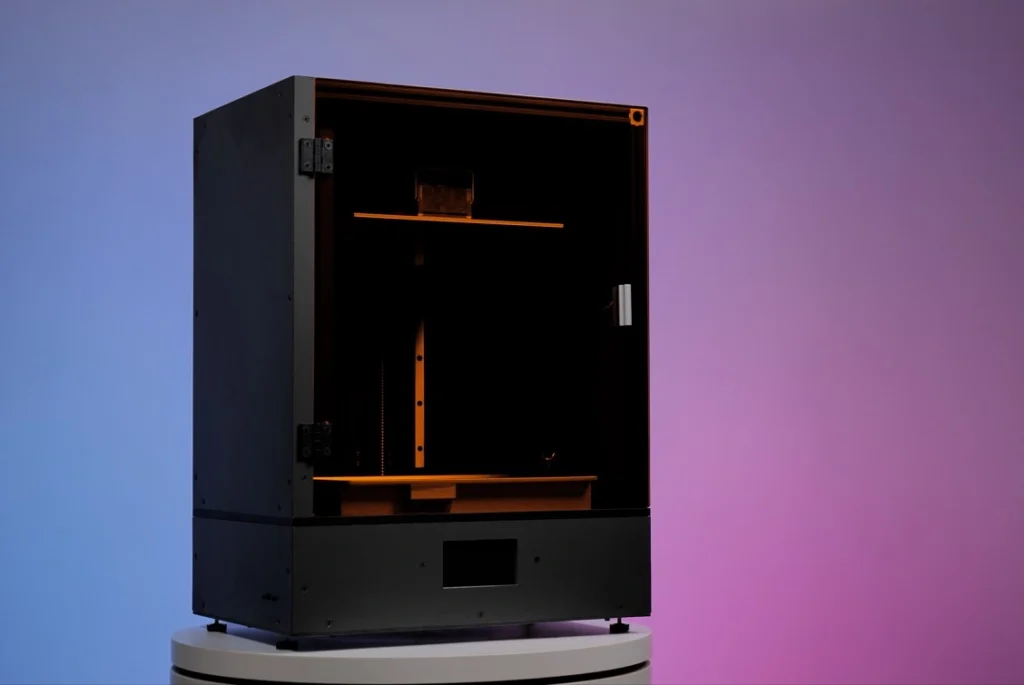
1. The Peopoly Ecosystem: Understanding High-Volume Resin Costs
Peopoly machines often use specialized resins like Deft or Neo to balance speed and accuracy in large volumes. Understanding the price per gram is only the beginning.
1.1. High-Speed and Standard Resins (Deft, Siraya Tech)
Many Peopoly users opt for resins like Peopoly Deft or Siraya Tech Fast to reduce print times on massive objects.
- Volumetric Reality: Large prints have more surface area, leading to higher resin “clinging.” A Peopoly resin cost calculator must account for the resin that stays on the model and the build plate, which is eventually washed away.
- Support Structure Waste: On a Phenom Forge, supports are not just small pins; they are structural pillars. It is common for supports to account for 40% to 60% of the total resin weight in large-format industrial prints.
1.2. Engineering-Grade Resins (Moai, Blu, Sculpt)
When printing functional prototypes or molds, the cost per liter can skyrocket.
- The Cost of Failure: A failure on a Peopoly Phenom after 15 hours of printing can waste 500ml of resin or more. We recommend a “Risk Factor” of at least 20% when budgeting for large-scale engineering projects to cover potential mechanical failures or VAT leaks.
2. Hardware Amortization: The Industrial LCD and Vant Factor
Peopoly printers are built for heavy-duty use, but their components are still consumables.
2.1. Panel Longevity and Replacement
The large 4K and 8K panels in Peopoly machines are expensive. While Mono-LCDs last roughly 2,000 hours, heat management in large-format printers is a constant challenge.
- Hourly Depreciation: Divide the cost of your replacement panel (e.g., $300 – $600) by 2,000 to find your hourly “wear tax.” If a massive industrial part takes 24 hours to print, your Peopoly resin cost calculator must add this hardware cost to the quote.
2.2. FEP and ACF Film Strategy
Peopoly printers often use FEP or the newer ACF films. Because of the “peel force” generated by large cross-sections, these films stretch and cloud faster than on small printers.
- Maintenance Cycles: Plan to replace your film every 20-30 large prints. A clouded film on a large VAT will cause suction failures. Factoring a “film fee per print” ensures you have the budget for high-quality replacements without eating into your profit.
3. Slicer Estimates vs. Real-World Waste
Never trust the slicer (Chitubox or VoxelDance) 100%. Industrial reality is different.
- Residual Resin Loss: On large build plates, resin clings to every corner. This “process loss” is usually 7% to 10% for large-format machines.
- Vat Minimums: You cannot run a Peopoly Phenom with only 100ml in the tank. You often need a 500ml-1L “dead zone” to ensure the pump or suction doesn’t introduce air bubbles. Professional calculators include this overhead.
Peopoly Resin Cost Calculator: Post-Processing and Industrial Labor
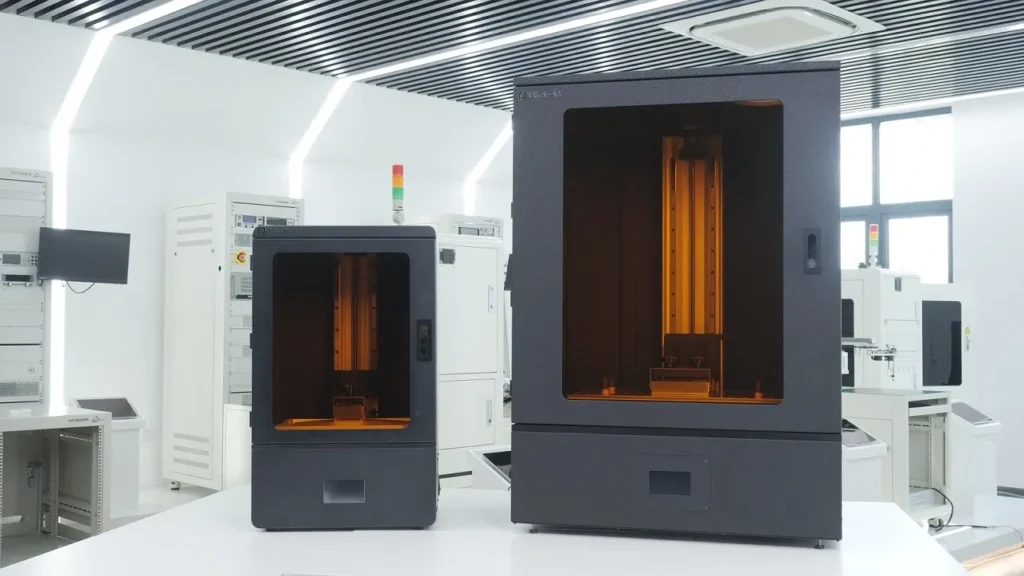
Once your Peopoly Phenom or Forge finishes a 24-hour cycle, the real work begins. In large-format printing, post-processing isn’t just a chore—it’s a major cost center. The liters of solvent used, the energy for large-scale curing, and the skilled labor required to handle heavy builds can drastically alter your ROI. To maintain profitability, these variables must be synced with your 3D resin printing cost calculator strategy.
4. Large-Scale Post-Processing: The Chemistry of Scale
Cleaning a part that takes up the entire build volume of a Peopoly Forge requires industrial-sized washing stations and massive amounts of solvent.
4.1. Solvent Management (IPA and TPM)
Peopoly users often deal with deep tanks of Isopropyl Alcohol (IPA) or Tripropylene Glycol Methyl Ether (TPM).
- Saturation Point: Because Peopoly prints have massive surface areas, they carry more uncured resin into the wash. This saturates your solvent 3x faster than small-scale hobby printing.
- The Cost of Refreshing: Replacing 20 liters of IPA is a significant expense. A professional Peopoly resin cost calculator must track “solvent life.” If you don’t factor in a $5 – $10 “cleaning fee” per large print, you are losing money on every gallon of alcohol you buy.
4.2. Industrial Curing and Energy Costs
Large parts require long curing cycles in high-output UV chambers.
- Heat and Power: Curing an engineering-grade part for 2 hours at 60°C consumes measurable electricity. While negligible for a single miniature, in a 24/7 industrial environment, this power consumption should be part of your “machine hourly rate.”
5. Labor: The Most Expensive Variable
In the US and UK markets, technical labor is the primary driver of cost. Handling a Peopoly build plate requires more than just a scraper; it often requires heavy-duty tools and significant time.
5.1. File Preparation and Structural Supports
Orientation for a large-format printer like the Phenom is complex. You have to manage suction forces that could literally rip the FEP film. A technician spends 30–60 minutes per build just on support strategy. This “Digital Labor” must be billed.
5.2. Post-Print Handling and Finishing
Removing supports from a 40cm tall print is a physical task that can take an hour or more. Sanding contact points and performing quality control for industrial tolerances is meticulous work. If your Peopoly resin cost calculator only looks at resin weight, you are missing the most significant cost: the human being doing the work.
6. Risk Mitigation: The Large-Format Failure Tax
In large-format printing, a failure is a catastrophe. If a 1kg print fails at 90%, you’ve lost $50 in resin and 20 hours of machine time.
- Failure Rate (Safety Buffer): We recommend adding a 15% to 20% risk margin to every Peopoly quote. This covers the “hidden cost” of the occasional failed print or the time spent cleaning a failed vat.
- Preventative Maintenance: Replacing fans, lubricating the Z-axis, and checking the light engine are essential for large machines. These maintenance hours are a fixed cost of doing business.
7. Pricing Strategies for Peopoly Owners
How do you turn these massive costs into a profitable quote?
- Industrial Prototyping: Sell the “Time to Market.” A 5x markup on total costs is standard for rapid prototyping.
- Short-Run Manufacturing: If you are printing 50 units of a part, focus on “Cost per Unit” efficiency, aiming for a 3x to 4x markup.
- Specialized Tooling: Jigs and fixtures for factories have high value. Pricing should be based on the “Alternative Cost” (e.g., how much would CNC machining this cost?), often allowing for 10x margins.
Conclusion: Data-Driven Scaling
Scaling with Peopoly hardware requires industrial-grade financial precision. By tracking resin volume, hardware wear, solvent saturation, and skilled labor, you move from a “maker” to a “manufacturer.”
Always consult the official Peopoly Support for the latest exposure settings—every second shaved off a layer is an extra dollar in your pocket when printing at this scale.
Expert Frequently Asked Questions
Yes, the calculator is fully compatible with the Phenom, Phenom Forge, Prime, and XXL series. You can customize the LCD lifespan data based on your specific 4K or 8K model.
Implementing a two-stage wash system (dirty wash and clean rinse) significantly extends IPA life. For large Peopoly builds, using a solvent recycler can recover up to 90% of your waste alcohol.
Large-format failures are expensive due to the high volume of resin and long print times. A 15-20% margin ensures that successful projects cover the cost of occasional mechanical or suction-based failures.