


Voron Print Cost Calculator
Professional free expense estimator for Voron Design printers
Voron Print Cost Calculator – Free Online Expense Estimator
The Voron Design project has revolutionized the world of DIY 3D printing. Whether you are running a Voron 2.4 (350mm), a Trident, or a compact V0.2, these machines are built for one thing: high-speed, high-quality production. However, with great power (and speed) comes the need for precise financial management. Understanding the “Cost Per Part” (CPP) is crucial for any Voron owner, whether you are printing a replacement Stealthburner part or running a commercial print farm.
In this comprehensive guide, we will break down the complex variables that dictate the operational costs of a Voron build and show you how to use our Voron Print Cost Calculator to maximize your workshop’s efficiency.
Why Precision Matters for Voron Builds
Unlike off-the-shelf consumer printers, a Voron is a customized beast. Most Voron builds use high-wattage AC silicone heat pads (often 500W to 750W for a 350mm bed) and high-current stepper motors. This means your energy footprint is significantly different from a standard Ender or Prusa.
- Professional Quoting: If you are part of the “Print It Forward” (PIF) program or selling functional parts on Etsy, underestimating your costs means losing money on every hour of print time.
- Energy Optimization: With global energy prices fluctuating, knowing exactly how many cents a 12-hour ABS print costs helps you decide when to run your machines.
- Filament Management: Voron printers are often used with high-end engineering materials like ABS, ASA, and Carbon Fiber-reinforced filaments. These aren’t cheap, and every gram matters.
Expert Tip: While calculating material and energy is the first step, understanding the long-term ROI is equally important. Use our3D Printer Amortization Calculatorto see when your Voron build pays for itself through savings or sales.
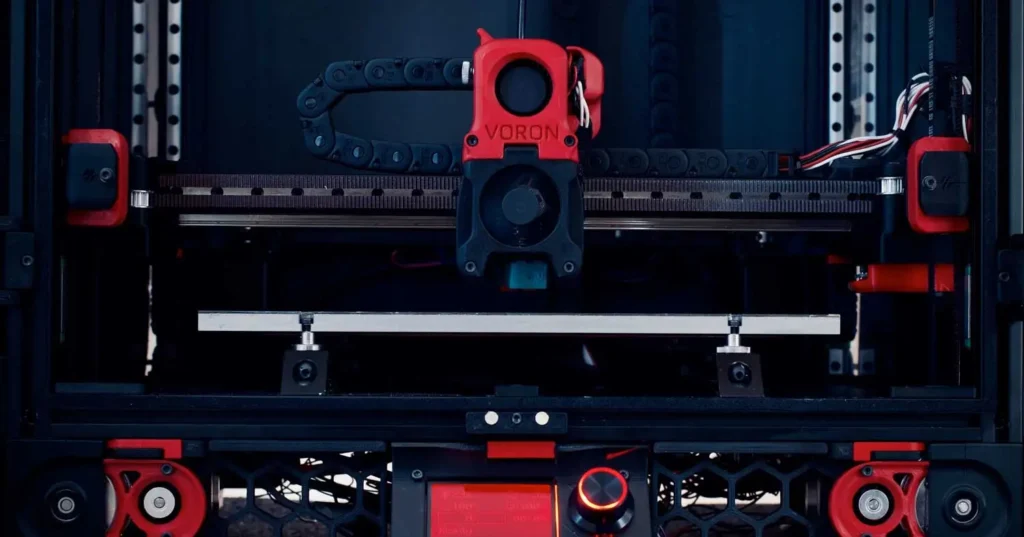
The Power Profile of a Voron Design Printer
Our calculator is specifically tuned for the unique power dynamics of a Voron. Standard calculators often fail here because they don’t account for the high-draw components found in a typical Voron build.
1. AC Heat Pads and Duty Cycles
Most Voron 2.4 and Trident builds utilize an AC-powered bed heater. These pads can draw a lot of power instantly but only cycle on for a few seconds once the target temperature (e.g., 110°C for ABS) is reached.
- The 45% Rule: Our calculator assumes a 45% average duty cycle. This accounts for the initial high-draw heating phase and the intermittent “blips” required to maintain a steady enclosure temperature.
- Enclosure Efficiency: A well-sealed Voron with panels and deck plate insulation consumes less energy to maintain temperature than an open-frame printer, making it surprisingly efficient for its size.
2. High-Speed Stepper Motors
To achieve 20k+ accelerations, Voron printers use powerful NEMA 17 (or even NEMA 23) motors. These motors draw constant current to hold position and move at high speeds. While this adds to the energy cost, the Klipper effect helps balance the scales.
- Speed vs. Duration: Because a Voron prints 3x to 5x faster than a standard printer, the total time the printer is “ON” is reduced. Printing a part in 2 hours instead of 8 hours significantly lowers the “base load” consumption (fans, Raspberry Pi, motherboard).
Material Costs: Accounting for the “Hidden Grams”
When using our tool, you will input the weight from your slicer (Orca Slicer, SuperSlicer, or PrusaSlicer). However, for a professional estimate, you must consider the material that doesn’t end up in the final part.
Support Structures and Purge Lines
Voron printers are frequently used for complex functional parts.
- Supports: Depending on the geometry, supports can add 20% to 50% to the total filament used.
- The “Voron Purge”: Voron start G-Code usually includes a purge line or a “blob” to prime the nozzle. While small, if you are doing 50 small prints a month, these grams add up. We recommend adding a 5% waste buffer to your calculations.
High-End Filaments
Voron machines are the gold standard for printing ABS and ASA. These materials require consistent heat and high-temp nozzles. Because these filaments are often priced higher than generic PLA, the “cost of failure” is also higher. A failed 300g print on a Voron 2.4 isn’t just a waste of time; it’s a significant financial loss.
2026 Market Dynamics: Energy and Filament
Our calculator’s default values are optimized for the 2026 market:
- Global Energy Trends: We provide regional presets for the US, UK, Canada, and Australia to give you a head start on local kWh rates.
- Engineering Grades: As more makers move toward high-performance materials, our tool allows you to input specific price-per-kilogram values to ensure your PA-CF or PC-CF prints are quoted accurately.
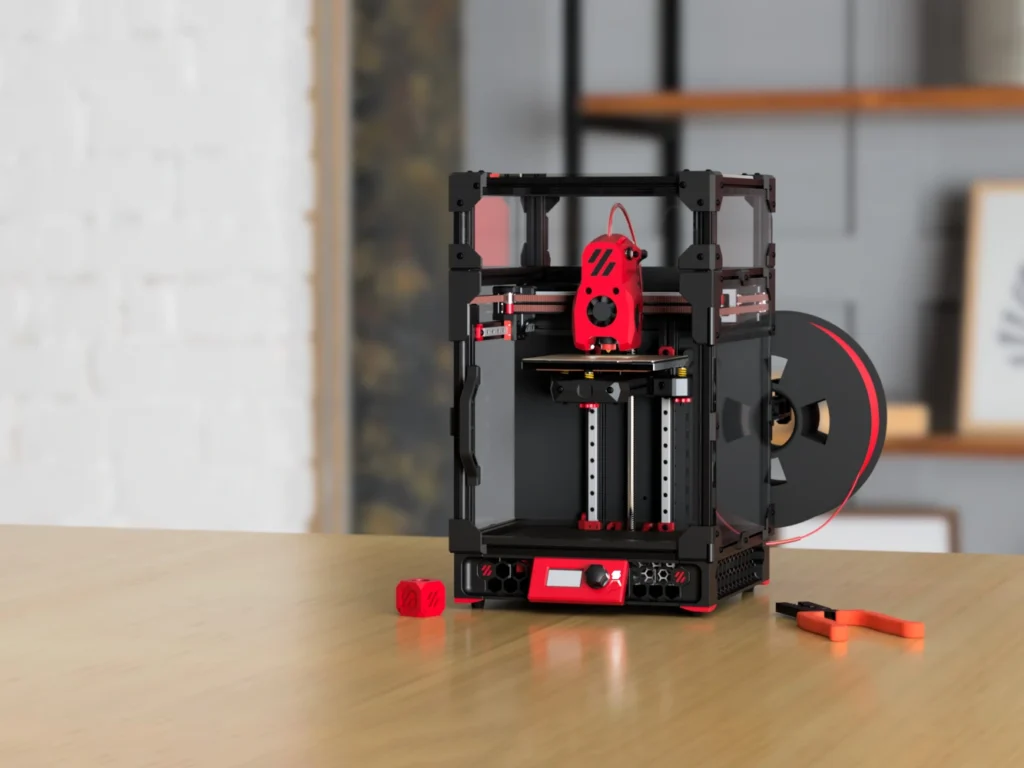
Voron Print Cost Calculator – Part 2: Maintenance, Labor, and Commercial Profitability
In Part 1, we established the fundamental costs of energy and filament. However, running a Voron 2.4, Trident, or V0.2 is unlike operating any other 3D printer. These machines are engineered for extreme speeds (500mm/s+) and accelerations. In the world of engineering, high performance always comes with a maintenance premium. In this second part, we will analyze the “silent” expenses that determine whether your Voron is a money-maker or a money-pit.
1. High-Speed Wear and Tear: The Maintenance Tax
A Voron printing at 20,000 $mm/s^2$ acceleration puts immense stress on its mechanical components. If you only calculate filament and power, you are ignoring the inevitable cost of replacement parts.
Linear Rails and Bearing Maintenance
Unlike v-slot wheels, the linear rails (MGN9/MGN12) used in Voron builds require regular cleaning and lubrication.
- Lubricant Costs: High-quality synthetic grease (like Mobilux EP2) is a small expense, but the frequency of application at high speeds is higher.
- Rail Longevity: Even with perfect maintenance, the balls inside the carriages eventually wear down. For a professional operation, you should set aside a “Maintenance Reserve” of $0.05 to $0.10 per printing hour to cover the eventual replacement of rails and bearings.
Motion System: Belts and Idlers
The CoreXY system in a Voron uses long runs of 6mm (or 9mm) Gates belts.
- Belt Stretch: Printing at high speeds causes belts to stretch and eventually fray.
- Idler Failure: The small bearings in idlers are often the first to fail under high tension. Replacing a $2 bearing isn’t expensive, but the 3 hours of labor required to disassemble a Voron 2.4 gantry is. Our Voron Print Cost Calculator helps you see if your margins are high enough to cover these “down-time” events.
Nozzle Erosion and Engineering Materials
Voron owners love ABS-CF (Carbon Fiber) and ASA-GF (Glass Fiber). These materials are incredibly abrasive.
- The Nozzle Tax: A standard brass nozzle will be ruined after just 500g of Carbon Fiber filament. Even hardened steel or tungsten carbide nozzles have a lifespan.
- PEI Sheets: High-temperature beds (110°C+) eventually cause the PEI adhesive or the coating itself to degrade. Plan to replace your spring steel sheet every 1,000 to 2,000 printing hours.
2. Valuing the “Human Element”: Labor in the Voron Ecosystem
One of the biggest mistakes in the maker community is valuing your time at $0. Because Voron printers are DIY builds, owners often forget that their expertise has a market value.
Slicing and Engineering Time
Setting up a print in Orca Slicer or SuperSlicer for a Voron isn’t just “plug and play.”
- Orientation Strategy: Choosing the right orientation to ensure structural integrity for functional parts is an engineering task.
- Support Optimization: Spending 15 minutes to manually place supports can save 2 hours of print time and 50g of filament. If your target hourly rate is $40, that 15-minute prep session just cost you $10. This must be added to your final quote.
Post-Processing and Quality Control
Voron parts are often used for mechanical assemblies (like the Stealthburner or Clockwork 2).
- Heat Stake Inserts: If you are selling “PIF” (Print It Forward) kits, the time spent installing brass heat-set inserts must be billed.
- Dimension Verification: Using calipers to ensure a part is within +/- 0.1mm tolerance is a professional service. Don’t give this time away for free.
ROI Deep Dive: If you want to know exactly when your Voron transitions from a cost-center to a profit-center, check out our3D Printer ROI and Amortization Calculator. It integrates your labor rates with your machine’s purchase price for a total financial overview.
3. Commercial Pricing Strategies for 2026
Once you have your Net Production Cost from our tool, how do you set your selling price? In the current market, three models dominate:
| Strategy | Formula | Best For |
| The Hobbyist Multiplier | Net Cost x 3 | Simple PLA/PETG parts, friends, and family. |
| The Engineering Rate | Net Cost + ($8 – $15 per hour) | Professional functional parts in ABS/ASA. |
| The “Boutique” Model | Net Cost x 7+ | High-end materials (PA-CF/PPSU) or complex multi-part kits. |
Why “Cost x 3” is often a trap
For a Voron, a simple 3x multiplier often fails to cover the “failed print” risk. Because Voron printers are complex, a 5% failure rate is realistic even for well-tuned machines. A professional quote should always include a 5-10% Risk Margin.
4. Efficiency Hacks to Lower Your Cost-Per-Part
To stay competitive in the 2026 3D printing market, you need to lower the numbers on your Voron Print Cost Calculator output:
- Input Shaper Tuning: Ensure your ADXL345 resonance compensation is perfect. Higher speeds mean shorter durations, which directly lowers the electricity cost per part.
- Nozzle Diameter Swap: Switching from a 0.4mm to a 0.6mm nozzle can reduce print time by 30-40% for structural parts with virtually no loss in strength.
- Filament Bulk Buying: Transition from 1kg spools to 3kg or 5kg spools. For high-volume Voron users, this can reduce your material cost by 20% overnight.
- Klipper Optimization: Use macros to automate bed leveling (Tilt Adjust/QGL) and nozzle scrubbing. Reducing the “pre-print” time by 5 minutes over 100 prints saves nearly 8 hours of electricity and wear.
Conclusion
A Voron is more than a printer; it is a high-speed manufacturing cell. By using our calculator to track your direct costs and applying the maintenance and labor principles in this guide, you can ensure your Voron build remains a sustainable and profitable asset. Whether you are a hobbyist pushing the limits of speed or a professional providing high-strength parts, data is your most important tool.
Frequently Asked Questions (FAQ)
How accurate is the power consumption estimate for Voron printers?
Our calculator uses a 45% duty cycle coefficient tailored for Voron builds. Since most Vorons use high-wattage AC bed heaters that cycle once reaching temperature, this provides a much more realistic estimate than simply using the power supply’s peak rating.
Does the weight include supports and purge lines?
The calculator relies on the weight you input. We recommend using the “Total Filament Used” value from your slicer (Orca Slicer or SuperSlicer), which includes supports, brims, and purge lines, to get a 100% accurate cost.
Does the V0.2 really consume that much less energy?
Yes. Due to its smaller bed (usually 120mm) and smaller enclosure volume, the Voron V0.2 requires significantly less energy to maintain ambient temperatures compared to a 350mm Voron 2.4. It is one of the most efficient high-speed printers available.
Should I include maintenance in my price?
For professional services, yes. High-speed printing increases the wear on linear rails and belts. To calculate your long-term business health, we suggest using our ROI Calculator alongside this cost estimator.