

Best 3D Printer for Small Business 2026: A Strategic ROI Analysis
Stop guessing your margins. In 2026, the best printer is the one that pays for itself the fastest.
The additive manufacturing landscape has undergone a radical shift. In 2026, the question is no longer about which machine has the best resolution—it is about which machine offers the lowest Total Cost of Ownership (TCO). For entrepreneurs and engineers, selecting the best 3D printer for small business in 2026 requires a cold, hard look at the data. Speed is a commodity; uptime and material yield are the new currencies of success.
Whether you are launching a custom part service or a high-volume print farm, your profitability hinges on one factor: Investment Amortization. To assist with this complex calculation, we have integrated our 3D Printing Cost Calculator into this guide, allowing you to simulate real-world production scenarios before spending a single dollar on hardware.
01. The Leading Contenders for 2026
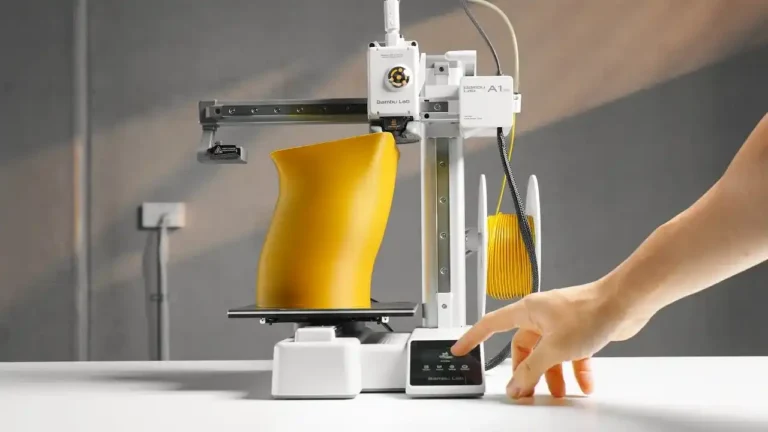
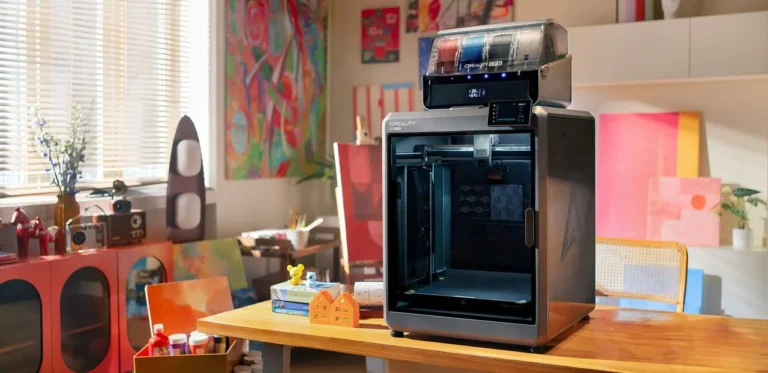
The 2026 market is divided between the “Pro-sumer” powerhouses and the “Industrial-Lite” machines. For most small businesses, Bambu Lab remains the ecosystem to beat, but the choice between models is a financial crossroads.
Bambu Lab P2S: The Efficiency Champion
The P2S is widely regarded as the best 3D printer for small business in 2026 for those scaling production farms. It strips away the LiDAR and complex AI features of its bigger brother to focus on raw uptime. When you are running 20 units, the initial $400-500 difference per machine significantly impacts your break-even point.
Bambu Lab X1-Carbon: The Engineering Standard
If your business model focuses on high-margin engineering parts (PA-CF, PEEK-Lite), the X1C is your safe bet. Its thermal stability and active chamber heating allow for a success rate that cheaper machines cannot match. In business, a failed 15-hour print is not just lost plastic; it is lost machine time and potential revenue.
02. Decoding the Hidden Economic Load
Small business owners often fall into the trap of calculating costs based on filament weight alone. To truly succeed, you must master the three pillars of 3D printing OPEX:
In 2026, energy prices are a volatile variable. A farm of 10 printers can draw up to 4kW during the initial heating phase. Smart entrepreneurs now use “Sequential Start” protocols to avoid peak demand surcharges from utility companies.
High-speed printing is violent. Carbon rods, idlers, and hardened steel nozzles wear out 2x faster than on 2021-era machines. Professional accounting requires setting aside $0.15 for every hour the machine is running.
03. High-Margin Strategies for 2026
How do top-tier print services maintain 300% margins? They stop selling “plastic” and start selling “solutions.” By focusing on niches like custom medical braces, aerospace prototypes, or replacement parts for obsolete industrial machinery, the price shifts from “cents per gram” to “dollars per hour.”
Utilizing the AMS 2 Pro system also allows for multi-material support interfaces. This reduces post-processing labor by 80%—and in a small business, labor is your most expensive cost. If you can save 20 minutes of sanding per part, your ROI accelerates by 30%.
2026 Profitability Benchmarks
| Target ROI Cycle | 5 – 7 Months |
| Optimal Machine Load | 72% (Utilization) |
| Failure Rate Threshold | < 2.5% |
Investment Readiness
Is your business model profitable?
CALCULATE YOUR ROI →