

Creality K1C vs. Anycubic S1: Which Enclosed 3D Printer Wins in 2026?
In 2026, the era of open-frame printers is fading for serious makers. If you want to print professional materials like ABS, ASA, or Carbon Fiber, you need a controlled environment. Today, we pit the battle-tested Creality K1C against the newcomer tech-giant Anycubic S1.
1. The Battle of the Enclosures
- Creality K1C (The “C” stands for Carbon): This isn’t just a box; it’s a reinforced fortress. Creality focused on making the K1C a “workhorse” for engineers. With its die-cast parts and glass panels, it’s built to handle high-temperature materials without breaking a sweat.
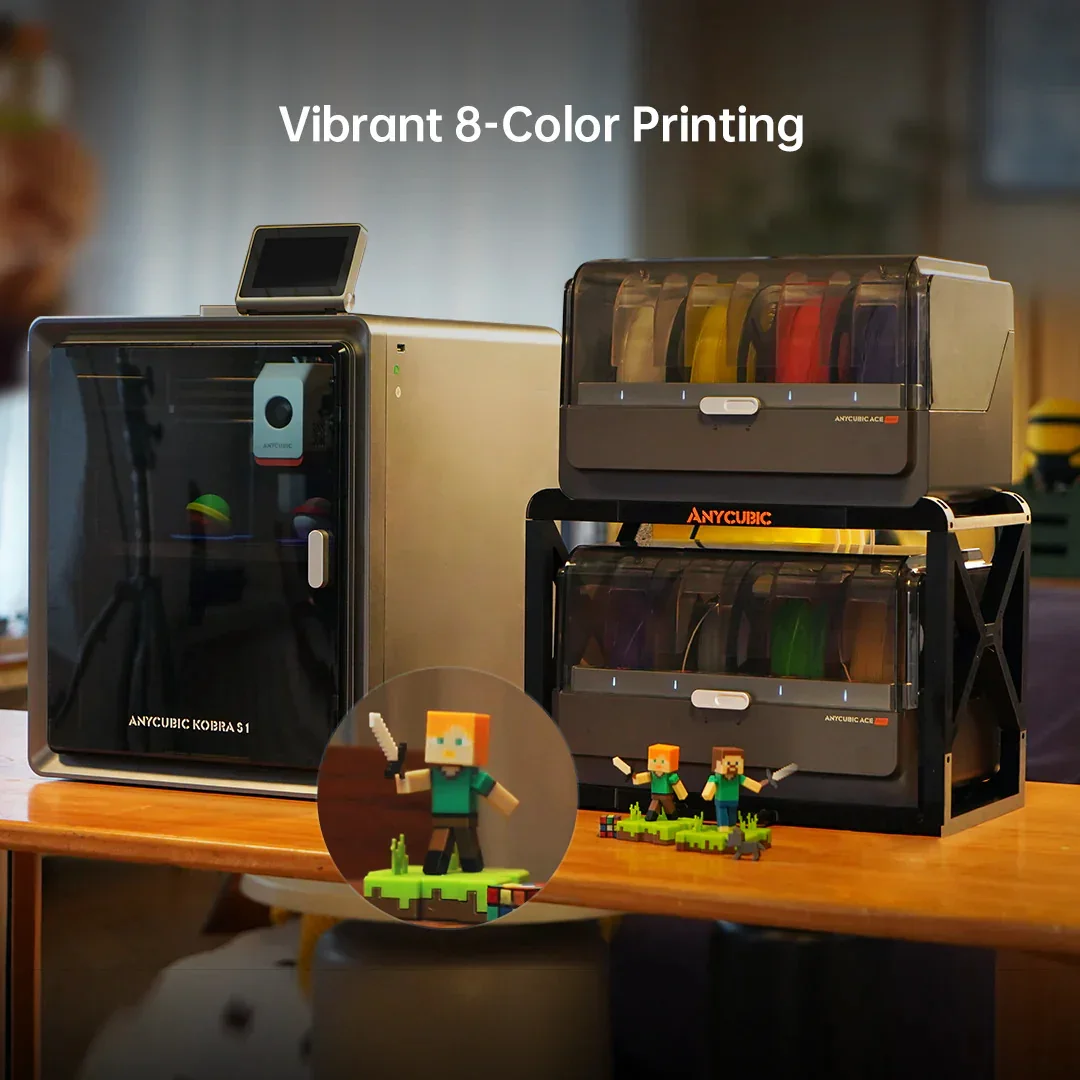
- Anycubic S1 (The Intelligent Fortress): Anycubic enters the enclosed market with a focus on “Smart Isolation.” The S1 uses high-tech polymer panels that heat up faster and retain chamber temperature more efficiently than standard glass, aiming for the perfect first layer every time.
2. CoreXY: The Speed Standard
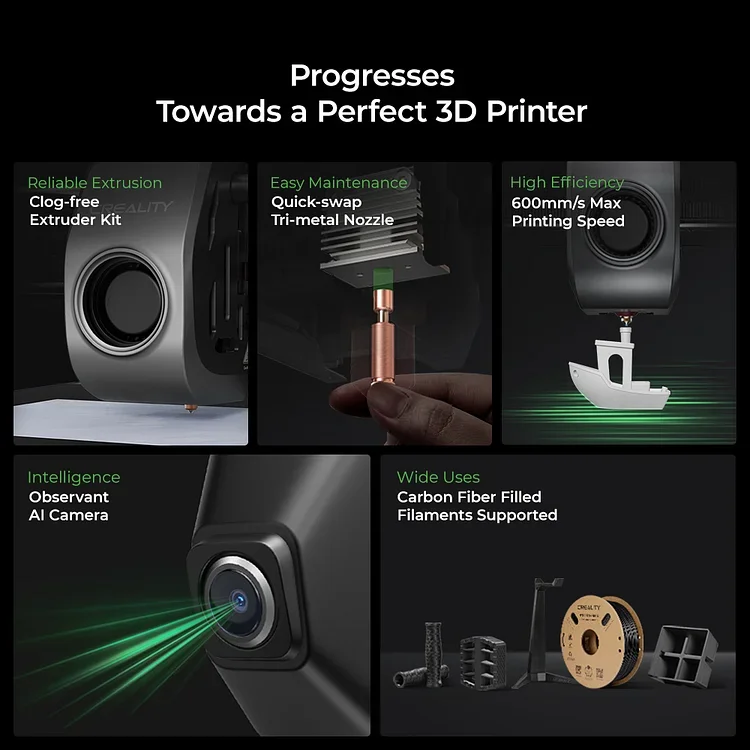
Both machines utilize the CoreXY motion system, allowing them to reach a blistering 600 mm/s.
- Creality K1C leans on its proven Klipper-based OS for rock-solid stability.
- Anycubic S1 introduces a refined ultra-light print head, aiming to reduce “ringing” even at maximum acceleration.
3. High-Conversion Comparison Table
| Feature | Creality K1C | Anycubic S1 |
| Frame Type | Full Metal + Glass | Insulated High-Tech Polymer |
| Motion System | CoreXY (Proven) | CoreXY (Ultra-Light) |
| Max Speed | 600 mm/s | 600 mm/s |
| Target User | Engineers / Pro Makers | Tech Enthusiasts / Speed Seekers |
600 mm/s Speed Test: Can the Anycubic S1 Outrun the K1C?
In 2026, saying you can hit 600 mm/s is one thing; delivering a smooth surface at that speed is another. This is where the mechanical engineering of the Creality K1C and the Anycubic S1 truly diverges.
1. Acceleration: The Real Productivity Killer
Top speed is for marketing; acceleration is for productivity.
- Creality K1C: Pushes a respectable 20,000 mm/s². It’s tuned for a balance between speed and motor longevity. It handles sharp corners with surgical precision thanks to its fine-tuned “Input Shaping” algorithms.
- Anycubic S1: This is where Anycubic tries to snatch the crown. It boasts a massive 22,000 mm/s² acceleration. Because the S1 uses a lighter composite toolhead, it can change directions faster, shaving minutes off complex, multi-cornered prints.
2. Print Quality: Ghosting vs. Precision
- Vibration Compensation: Both machines use built-in G-sensors to calibrate for vibrations. However, the K1C’s rigid all-metal frame provides a slightly more stable base, which often results in cleaner vertical walls on very tall prints.
- The S1 Advantage: The Anycubic S1 counters with a “Dynamic Flow” sensor. It doesn’t just compensate for vibration; it adjusts the filament extrusion in real-time to match the aggressive speed changes, preventing under-extrusion at the start of a line.
3. High-Performance Specs Comparison
| Metric | Creality K1C | Anycubic S1 | Winner |
| Top Speed | 600 mm/s | 600 mm/s | Tie |
| Acceleration | 20,000 mm/s² | 22,000 mm/s² | Anycubic S1 |
| Motion Rails | Steel Linear Rails | Lightweight Alloy | Anycubic S1 |
| Frame Rigidity | Full Die-Cast (Heavy) | Composite/Metal Mix | Creality K1C |
Part 3: Engineering Material Showdown – ABS, ASA, and Carbon Fiber
An enclosed printer is only as good as its ability to handle “difficult” materials. In 2026, the Creality K1C and the Anycubic S1 are both marketed as “Pro” machines, but their thermal DNA is different.
1. Chamber Temperature & Warping Defense
To prevent warping in materials like ABS or ASA, you need a hot, stable environment.
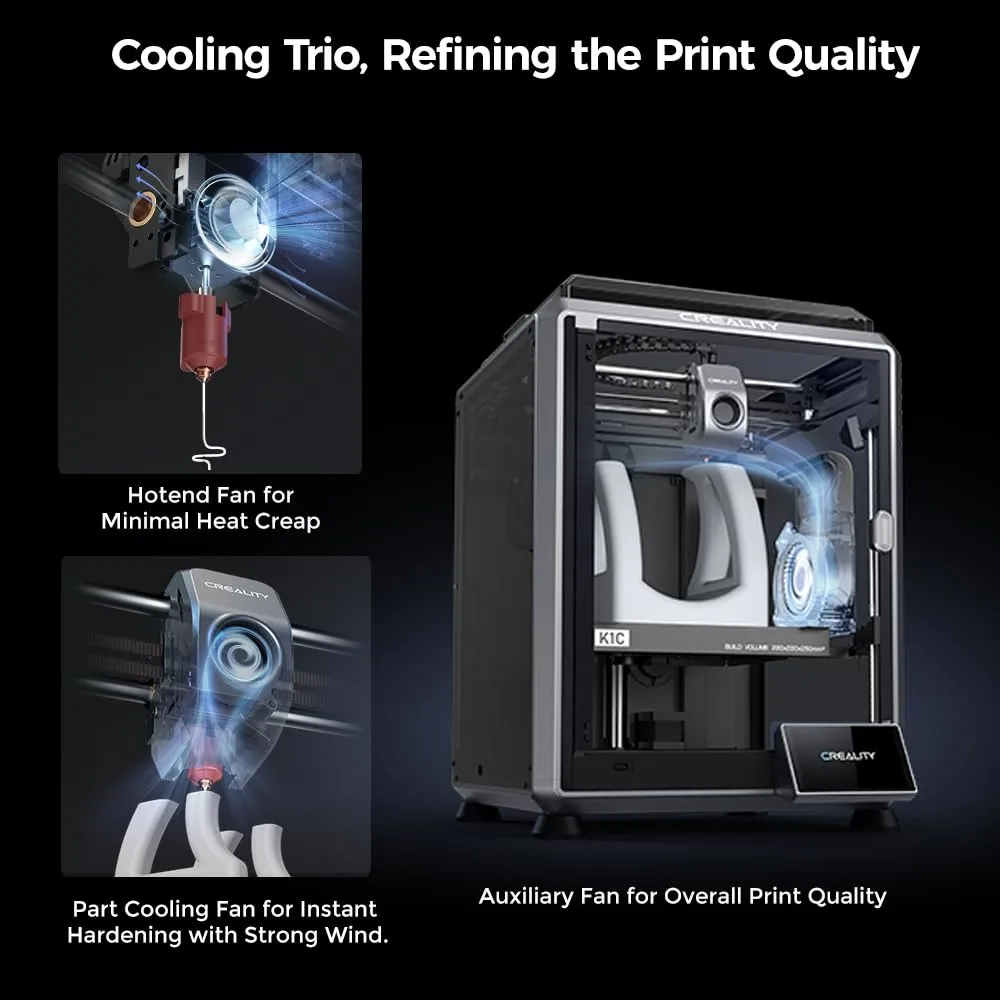
- Creality K1C: The full metal and glass enclosure acts like a thermal vault. It excels at trapping heat, maintaining a consistent internal temperature. Its built-in Active Carbon Filter is a lifesaver, scrubbing the toxic fumes and smells associated with industrial filaments.
- Anycubic S1: The S1 utilizes “Smart Thermal Zoning.” It heats up the build plate and the nozzle faster than the K1C. While its enclosure is slightly more lightweight, it focuses on precision airflow control, ensuring that even high-temp layers are cooled at the exact millisecond needed to prevent sagging.
2. Nozzle Tech: The Carbon Fiber Specialist
- Creality K1C (The Unicorn Nozzle): The K1C features an all-integrated “Unicorn” nozzle made of hardened steel and copper. It is specifically designed to be abrasive-resistant. You can print Carbon Fiber (PA-CF) or Glow-in-the-dark filaments for 1000+ hours without the nozzle wearing down.
- Anycubic S1: The S1 uses a high-flow nozzle system that is excellent for speed but might require a hardened steel upgrade to match the K1C’s out-of-the-box durability with abrasive materials. However, its extrusion torque is slightly higher, making it less prone to jams with flexible filaments like TPU.
3. Thermal & Material Comparison
| Feature | Creality K1C | Anycubic S1 |
| Max Nozzle Temp | 300°C | 300°C |
| Max Bed Temp | 100°C | 110°C |
| Air Filtration | Built-in Active Carbon | Optional HEPA/Carbon |
| Abrasive Ready? | Yes (Hardened Steel Standard) | Requires Nozzle Swap |
| Chamber Sealing | Excellent (Glass/Metal) | Good (Polymer/Insulated) |
Part 4: Smart Features & AI: Which Printer is Actually “Intelligent”?
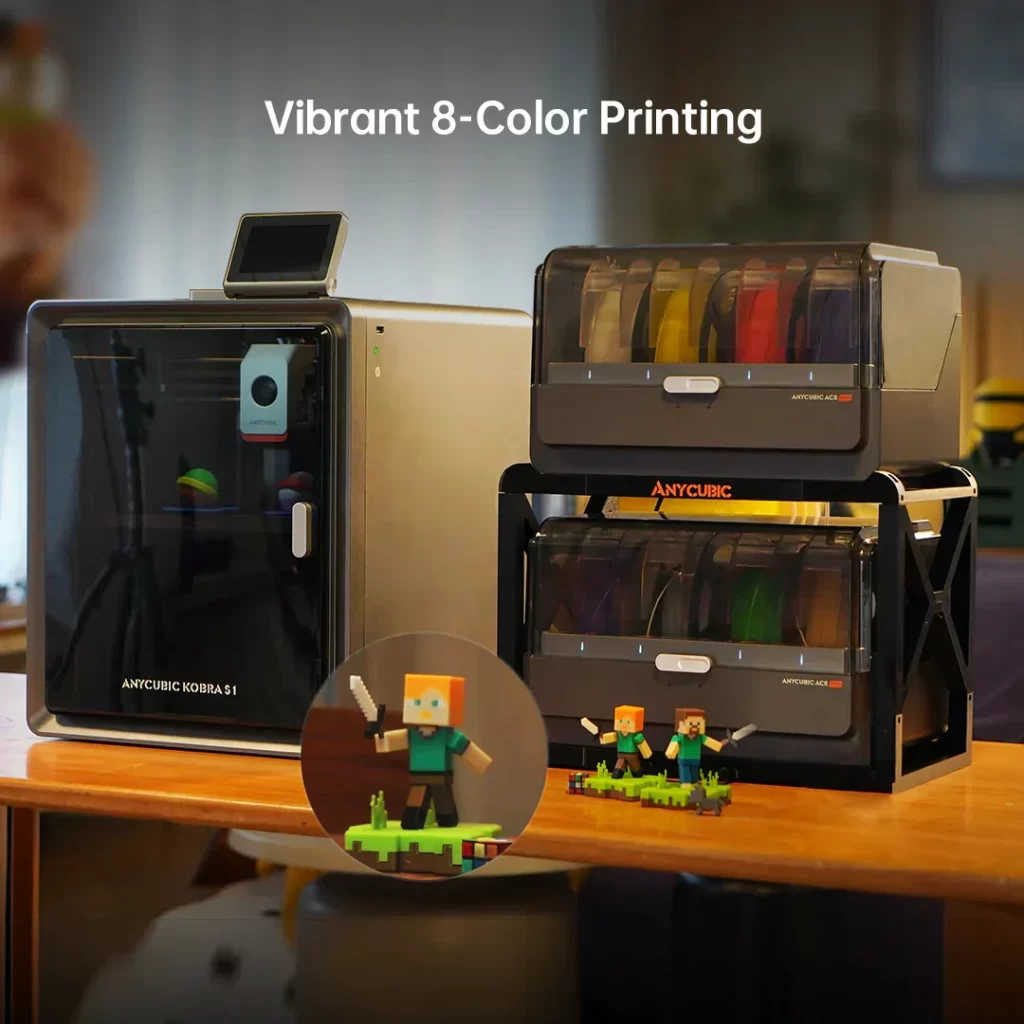
The Creality K1C and the Anycubic S1 both feature AI-driven monitoring systems. But there is a clear difference in their philosophy: one offers open-source freedom, while the other prioritizes a streamlined, “it-just-works” experience.
1. AI Camera: The Digital Guard
- Creality K1C: Comes standard with an AI Camera that does more than just record timelapses. It features “Spaghetti Detection” and “Foreign Object Detection.” If you leave a tool on the bed or the print fails, the K1C stops immediately. Its AI is battle-tested and integrates deeply with Creality Cloud.
- Anycubic S1: Anycubic’s new AI vision focuses on “First Layer Inspection.” The S1 scans the initial layer of your print; if it detects a lack of adhesion or a slight bubble, it alerts your phone before the second layer even starts. This is a game-changer for long ABS prints.
2. Software Ecosystem: Control vs. Simplicity
- Creality OS (Klipper Power): The K1C runs a specialized version of Klipper. It is an “open” ecosystem. If you are a power user, you can root the machine, access the web interface via a browser, and customize every micro-setting. The Creality Cloud app is also a massive social hub for free 3D models.
- Anycubic App: Anycubic takes the “SaaS” (Software as a Service) approach. Their app is cleaner, simpler, and less cluttered. It’s designed for the user who wants to select a model on their phone and hit “Print” without worrying about Z-offset or flow rates.
3. Intelligence & Connectivity Specs
| Smart Feature | Creality K1C | Anycubic S1 |
| Operating System | Creality OS (Klipper-based) | Anycubic Smart OS |
| AI Detection | Spaghetti & Object Detection | First Layer & Print Failure |
| Cloud Integration | Creality Cloud (Model Rich) | Anycubic Cloud (User Friendly) |
| Remote Access | App / Web Browser / Root | App / Optimized Cloud |
| Auto-Calibration | Full (Vibration + Leveling) | Ultra-Fast (AI-Assisted) |
4. Maintenance Alerts
- K1C: Will remind you to grease your rails and clean your carbon filter based on print hours.
- S1: Features a “Nozzle Health Monitor” that detects back-pressure increases, warning you of a potential clog before it actually ruins a print.
Part 5: The Final Verdict – Should You Buy the K1C or the S1?
After pushing both the Creality K1C and the Anycubic S1 to their limits, the winner depends on what kind of “Maker” you are. Both are top-tier enclosed CoreXY machines, but they serve different masters.
Which Printer is Right for You?
- Choose the Creality K1C if: You are a professional or a pro-sumer who prints with Carbon Fiber, ASA, or Nylon. Its hardened “Unicorn” nozzle and superior chamber insulation make it a localized factory for engineering parts. If you love “tinkering” with Klipper and want a massive community for support, this is your machine.
- Choose the Anycubic S1 if: You prioritize speed, automation, and a seamless user experience. With its 22,000 $mm/s^2$ acceleration and AI-assisted first-layer inspection, it is the more “intelligent” machine for those who want fast results without learning the deep mechanics of 3D printing.
📊 Master Comparison Summary (2026 Edition)
| Category | Creality K1C | Anycubic S1 | Winner |
| Mechanical Speed | 600 mm/s (Stable) | 600 mm/s (Aggressive) | Anycubic S1 |
| Build Quality | Full Die-Cast Metal | Composite / Alloy | Creality K1C |
| Material Range | Hardened Steel (Abrasive Ready) | Standard / High-Flow | Creality K1C |
| AI Intelligence | Spaghetti & Object Detection | First Layer & Clog Monitor | Anycubic S1 |
| Software | Open Klipper (Power Users) | Streamlined App (Hobbyists) | Tie |