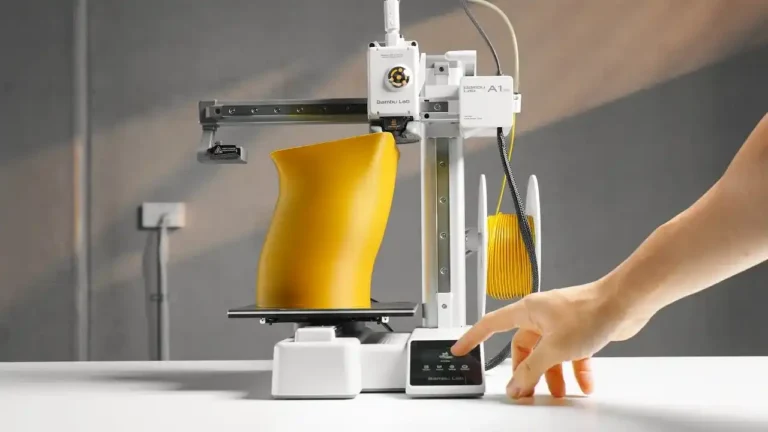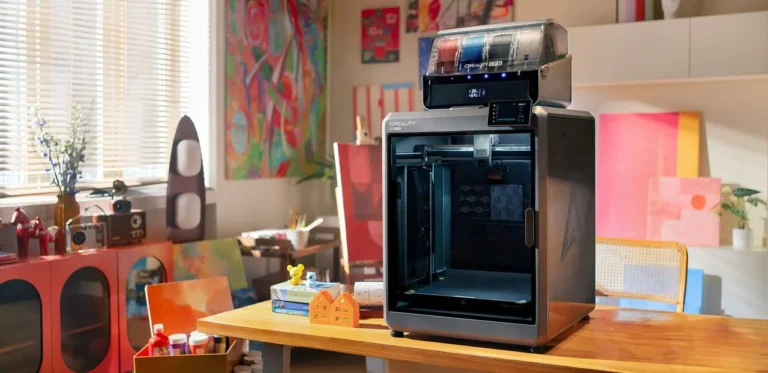


The landscape of additive manufacturing has undergone a seismic shift as we move through 2026. What was once a niche hobby for makers has evolved into the backbone of localized manufacturing and personalized commerce. In previous years, the conversation was dominated by simple “plug-and-play” features and raw speed. Today, the industry has matured, making Artificial Intelligence (AI) integration, zero-waste (purge-free) multi-material printing, and industrial-grade material compatibility the new baseline.
If you are looking for the best 3D printer 2026 has to offer, you are no longer just buying a machine; you are investing in a production ecosystem. In this deep-dive report, we analyze the top-tier models, the revolutionary tech trends of the year, and how to choose the right tool for your specific goals.
3D Printing Trends in 2026: The New Standard
By 2026, desktop 3D printers have achieved three major technological breakthroughs that render older models obsolete:
1. AI Visual Supervision 2.0
Modern cameras are no longer passive observers. Integrated AI chips now perform real-time surface analysis. They don’t just detect “spaghetti” failures; they measure layer adhesion and adjust the flow rate ($mm^3/s$) dynamically to compensate for filament diameter inconsistencies.
2. Purge-Free Multi-Material Efficiency
The era of the “waste tower” and “purge poop” is effectively over. New Hybrid Tool-Changer (H2C) systems and rapid nozzle-swapping technologies have reduced material waste by up to 90%. This makes multi-color printing economically viable for small businesses for the first time.
3. Active Thermal Chamber Management
Engineering plastics like ASA, Polycarbonate (PC), and Nylon (PA-CF) used to require massive industrial ovens. In 2026, even mid-range “prosumer” printers feature active chamber heating (reaching 60°C to 80°C), ensuring zero warping on large-scale functional parts.
1. Best Overall 3D Printer: Bambu Lab P2S
Bambu Lab continues its market dominance in 2026. The P2S, an evolution of the legendary P1S, has been refined into a masterpiece of user experience and reliability.
Technical Specifications
- Speed: 600mm/s print speed with 25,000 $mm/s^2$ acceleration.
- AMS 2.0 Pro: A redesigned Automatic Material System that features active dehumidification and a “jam-free” sensor array.
- Ultra-Silent Motion: Using next-gen TMC drivers, the P2S is virtually silent even at peak speeds, making it ideal for office environments.
Why It Wins
The P2S is for the user who values time over tinkering. Its “first-time-right” success rate is unmatched in the sub-$1,000 category. For small businesses running print farms, the P2S offers the best ROI (Return on Investment) through sheer uptime.
2. The Efficiency Revolution: Bambu Lab H2C
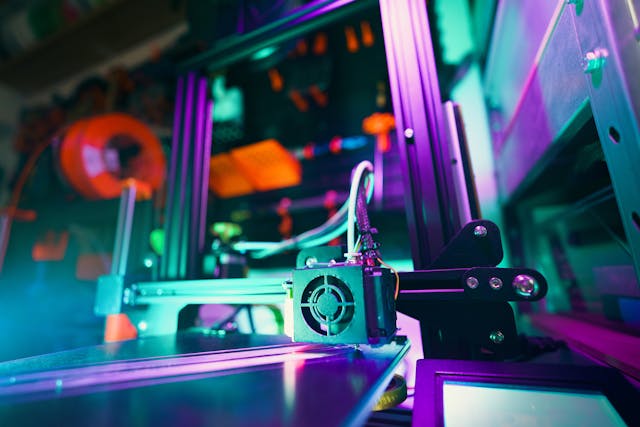
For those focused on aesthetics and complex multi-color models, the Bambu Lab H2C is the standout innovation of 2026.
The Hybrid Tool-Changer (H2C) Edge
Unlike traditional single-nozzle multi-material systems that waste filament during every color swap, the H2C utilizes a dual-head hybrid system. It switches between colors with a micro-purge cycle that is 80% more efficient than the old AMS systems.
- Economic Impact: Lower material costs mean higher profit margins for sellers on platforms like Etsy or local marketplaces.
- Precision: With a 0.01mm layer height capability, it produces near-injection-molded quality.
3. Best for Engineers & Functional Parts: Prusa CORE One
Prusa Research has finally combined its “open-source” philosophy with a high-speed CoreXY architecture. The Prusa CORE One is 2026’s most durable machine.
Engineering Excellence
- Active Thermal Control: The CORE One manages internal temperatures with precision, a necessity for structural integrity in automotive and aerospace prototypes.
- Self-Healing Calibration: Utilizing Load-Cell sensors, the printer calibrates its own Z-offset and bed leveling before every print without any user intervention.
- Serviceability: True to Prusa’s roots, every single component is user-replaceable, ensuring the machine remains a 10-year asset rather than a 2-year consumable.
4. Best Budget Performance: Elegoo Centauri Carbon
In 2026, “budget” no longer means “cheap.” The Elegoo Centauri Carbon offers premium features at a fraction of the price of its competitors.
- Carbon Fiber Components: By using carbon fiber for the X-axis, Elegoo has reduced moving mass, allowing for 600mm/s speeds with zero “ghosting” artifacts.
- Accessibility: It arrives 99% pre-assembled. You can go from unboxing to your first print in under 10 minutes.
- The Verdict: It is the perfect entry point for students and makers who need professional-grade speed on a hobbyist budget.
5. Best Large-Format Workhorse: Anycubic Kobra 4 Max
When size matters—for helmets, furniture components, or large architectural models—the Anycubic Kobra 4 Max is the king of the 2026 large-format market.
- Build Volume: A massive 450 x 450 x 500 mm.
- AI Flow Optimization: Large prints are prone to failure due to filament tension. The Kobra 4 Max uses AI sensors to detect knots in the spool before they ruin a 3-day print.
- Input Shaping: Advanced vibration compensation ensures that even at massive scales, the surface finish remains glass-smooth.
Strategic Comparison: The Best of 2026
| Model | Primary Strength | Ideal User | Est. Price |
| Bambu Lab P2S | General Reliability | Families / Small Business | $699 – $799 |
| Prusa CORE One | Material Strength | Engineers / Designers | $949 – $1099 |
| Bambu Lab H2C | Multi-color Efficiency | Artists / Sellers | $1199 – $1399 |
| Elegoo Centauri | Price to Performance | Beginners / Students | $299 – $349 |
| Anycubic Kobra 4 | Massive Build Volume | Prototypers / Cosplayers | $549 – $699 |
Critical Factors to Consider When Choosing
Before purchasing the best 3D printer 2026, ask yourself these three strategic questions:
Speed vs. Quality Balance
While 600mm/s is the standard in 2026, remember that physics still applies. High speeds can lead to reduced interlayer bonding. Always check if your printer supports “pressure advance” and “input shaping” to maintain strength at high velocities.
Material Versatility
Are you printing decorative PLA? Or do you need the heat resistance of ASA? If you plan to sell car accessories or outdoor tools, a printer with a hardened steel nozzle and an enclosed, heated chamber is mandatory.
Software Ecosystem & Security
The hardware is only as good as the slicer. Systems like Bambu Studio and PrusaSlicer are now highly advanced. In 2026, ensure your printer allows for “Local LAN” mode to protect your proprietary 3D designs from cloud-based data breaches.
Profiting from 3D Printing in 2026
The transition from hobbyist to professional has never been easier. With the efficiency of 2026 models, you can enter several high-growth markets:
- Customized Ergonomics: Printing bespoke grips, mouse shells, or keyboard housings tailored to a customer’s hand scan.
- Sustainable Homeware: Using recycled PETG to create designer lampshades and organizers.
- Obsolescence Solutions: Printing replacement parts for vintage cars or discontinued appliances where the original manufacturer no longer provides support.
Frequently Asked Questions (FAQ)
Q: Which 3D printer brand is most reliable in 2026?
A: Bambu Lab and Prusa remain the “Big Two.” Bambu Lab leads in pure innovation and ease of use, while Prusa leads in longevity and open-source flexibility.
Q: Is 3D printing still expensive in 2026?
A: No. The cost per gram of printing has dropped significantly due to multi-material efficiency. You can now get a professional-grade machine for the price of a mid-range smartphone.
Q: Do I need a PC to use these printers?
A: Most 2026 models are fully “Mobile-First.” You can slice, monitor, and start prints directly from your smartphone or tablet using cloud-native apps.
Conclusion: Which Model Should You Buy?
Choosing the best 3D printer 2026 depends on your mission:
- If you want a seamless, hassle-free experience: Go with the Bambu Lab P2S.
- If you are a professional engineer requiring durability: The Prusa CORE One is your tool.
- If you are a creative entrepreneur selling colorful art: The Bambu Lab H2C will save you a fortune in material costs.
The future of production is decentralized. By choosing the right 3D printer today, you are not just buying a machine—you are buying the freedom to create anything, anywhere.